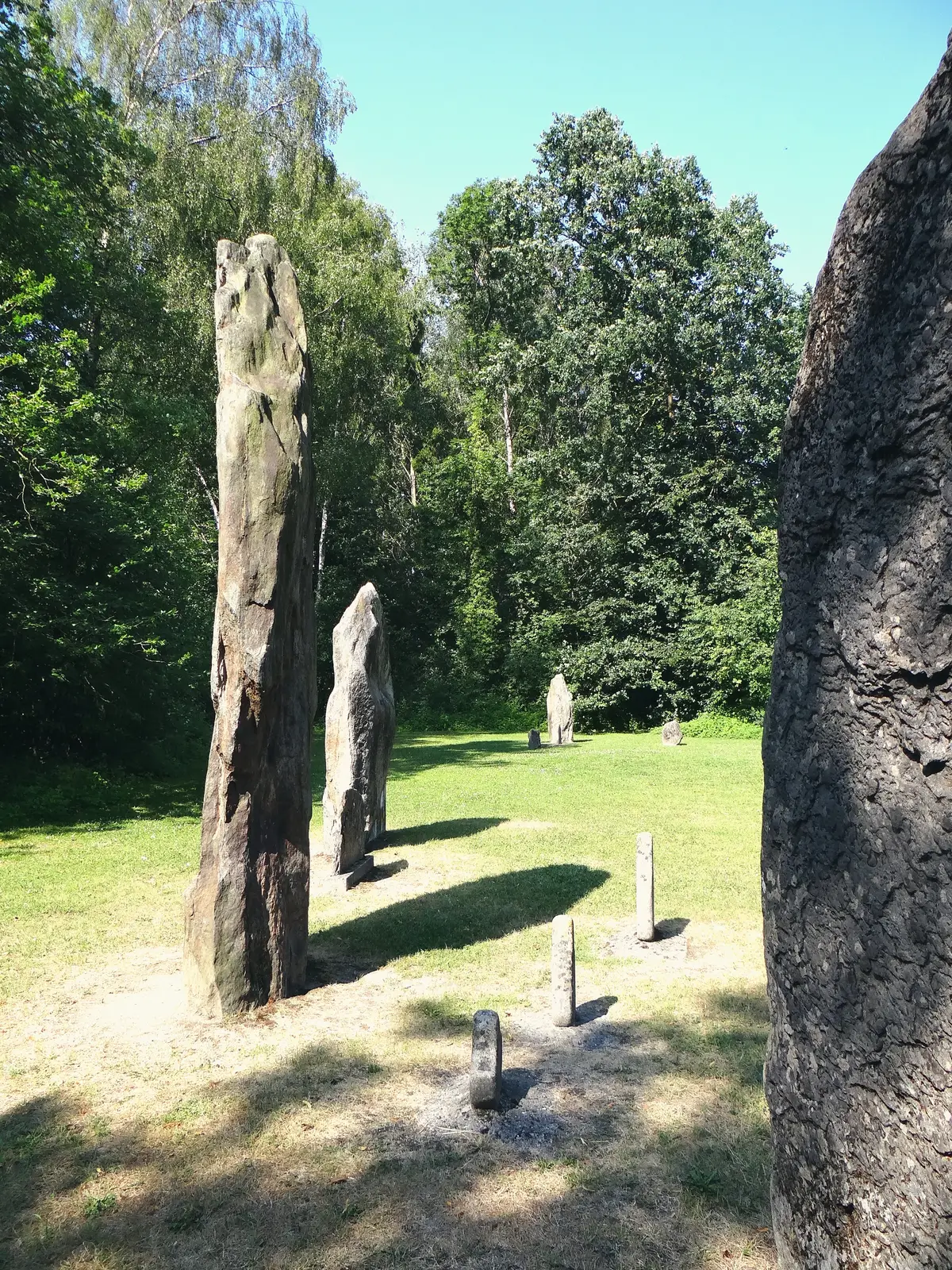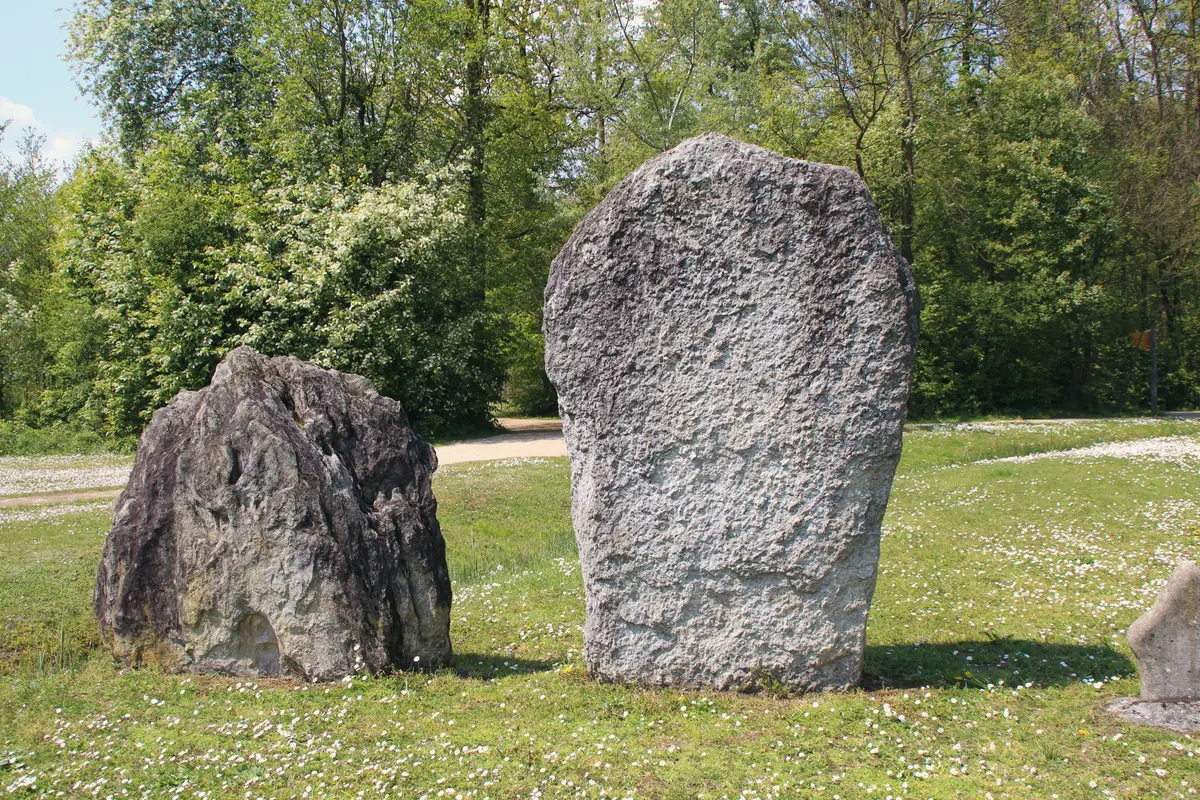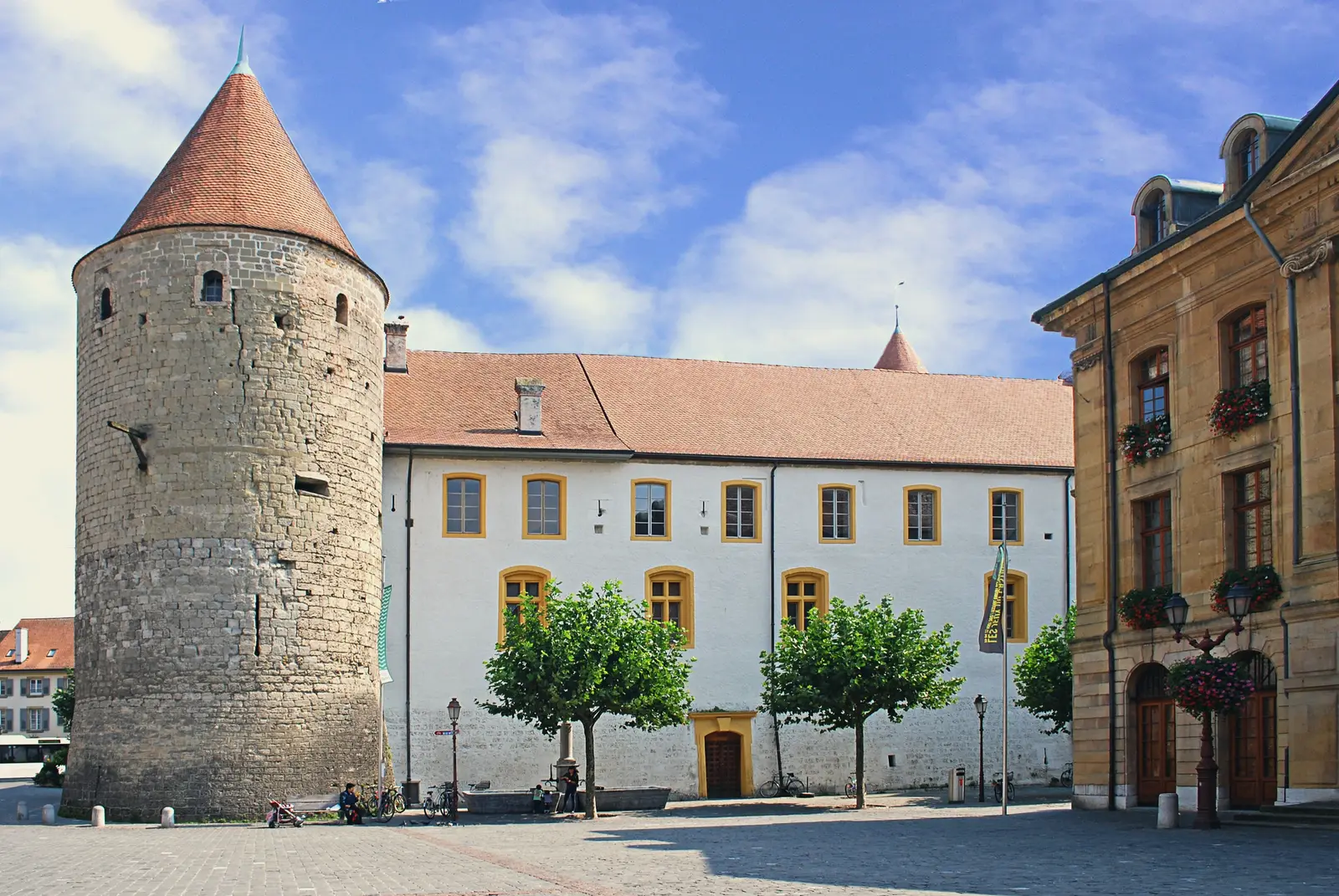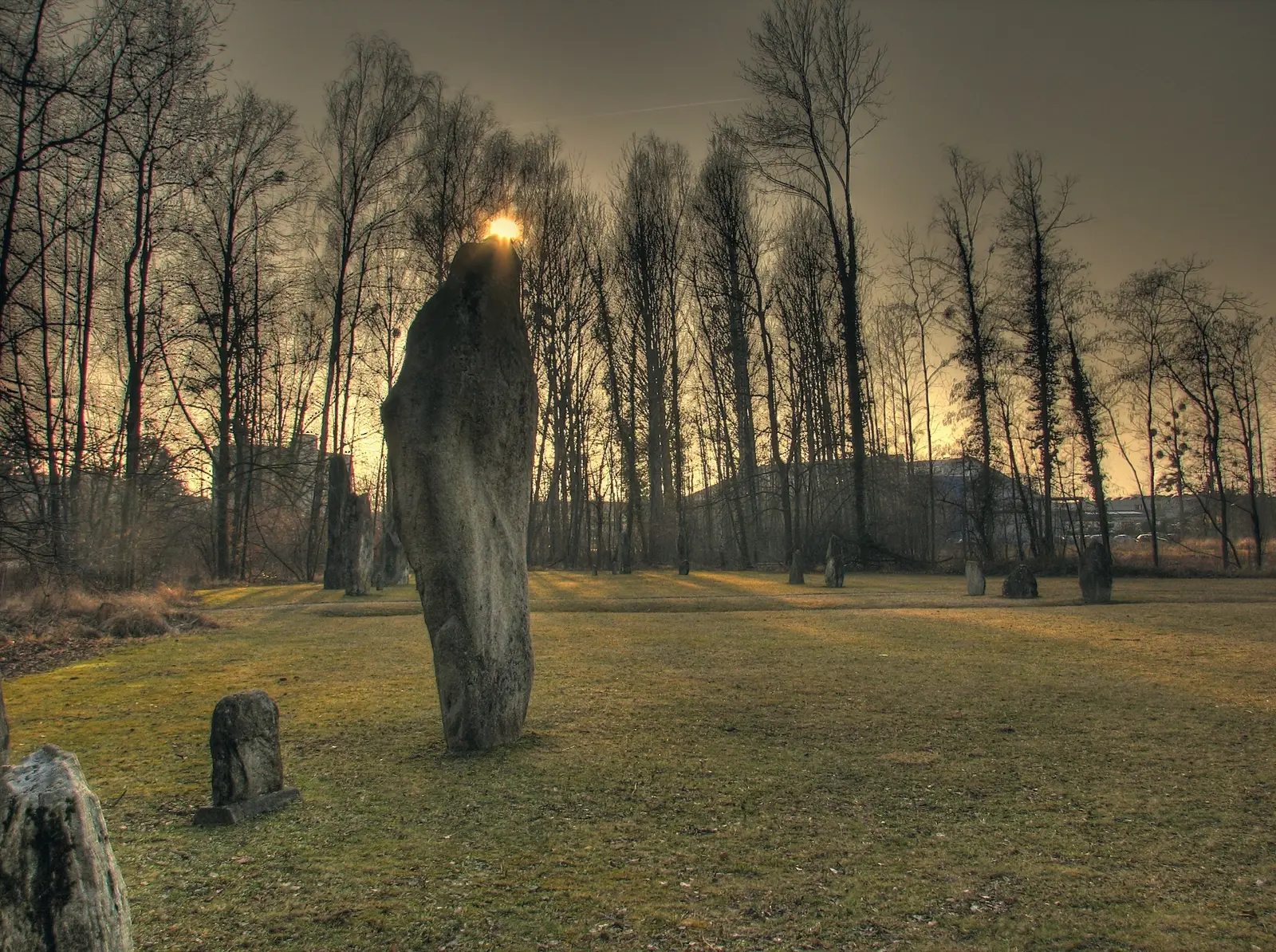
Between the old town and the lake stands a row of 45 standing stones. People raised them here more than 6,000 years ago, in the Neolithic, long before the Romans named the place or the castle went up. This is the Clendy alignment, the most important Neolithic site in Switzerland, and a close cousin of the great stone rows of Carnac in Brittany.
What you are looking at
Forty-five stones, set in lines and a small horseshoe. The largest reach around 4.5 metres and weigh up to five tonnes. Look closely and some are not just rough blocks: several are statue-menhirs, shaped by hand with a rounded “head and shoulders” profile that gives them an almost human outline, kin to the carved standing figures of the Mediterranean Neolithic. Bring nothing but your eyes and a little time, and let the scale of the effort sink in.
A site that vanished and came back
The stones did not always stand. They toppled in antiquity and were lost, then surfaced in the 19th century when the lake was lowered during the great Jura water correction. Only in 1975 were they recognised as a deliberate prehistoric alignment, and in 1986 they were raised again where they stand today. They belong to the prehistoric lakeshore landscape that UNESCO lists along these shores.
Practical notes
- Free, and open at any hour. There is no fence, no ticket and no gate. You can walk among the stones in the morning, at sunset, or after dark.
- Where: the Clendy quarter, on the flat ground by the lakeshore, reachable on foot or by bike from the centre, along the lake past the marina.
- What to bring: there is little shade and no kiosk on site, so carry water in summer.
- Source: Yverdon-les-Bains Région Tourisme.
Combine it
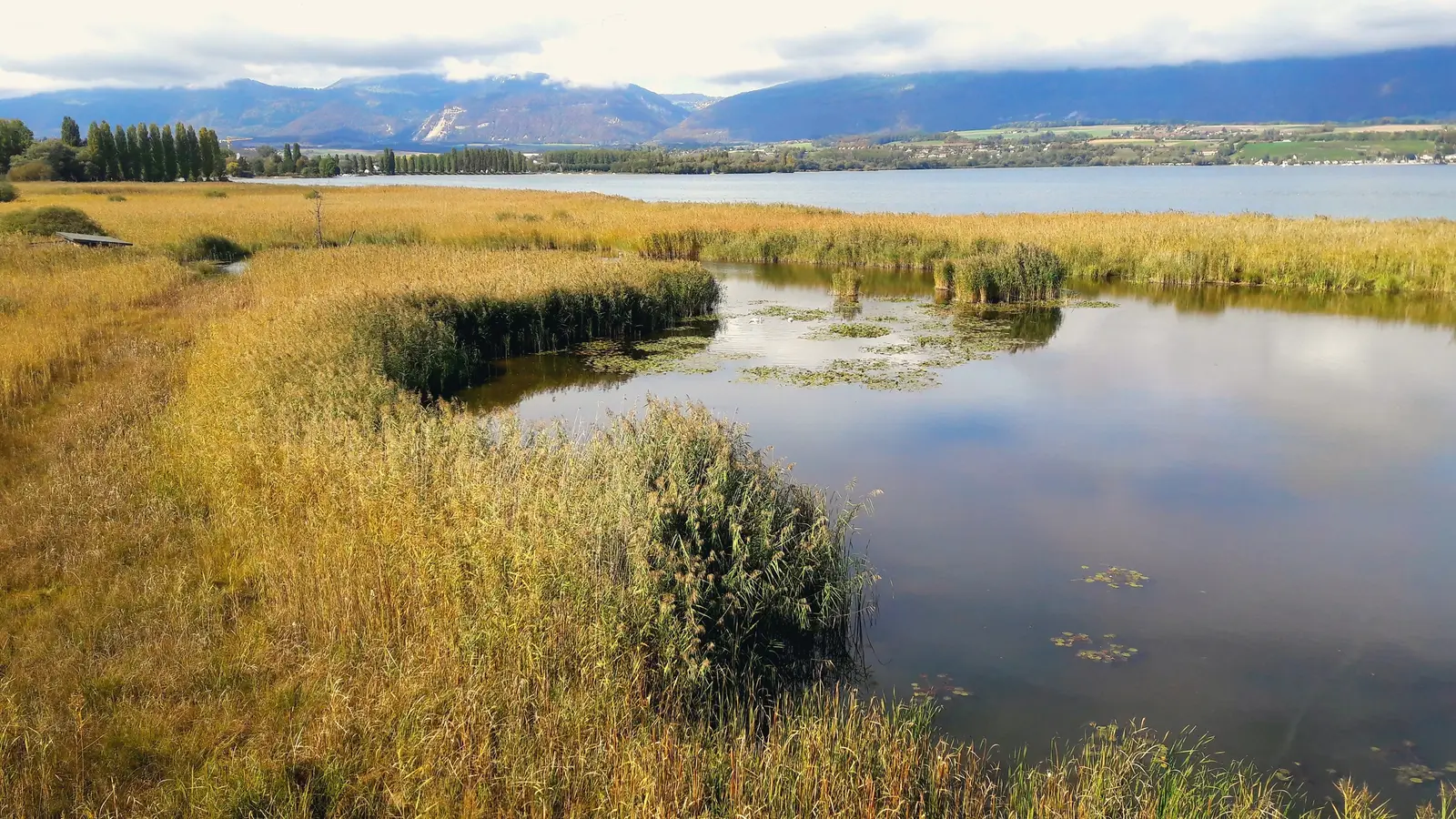
The lakeside path carries on east to Champ-Pittet and the reedbeds of the Grande Cariçaie. Starting at the menhirs and walking the shore makes an easy half-day on foot or by bike, with deep history at one end and one of Switzerland’s great wetlands at the other.