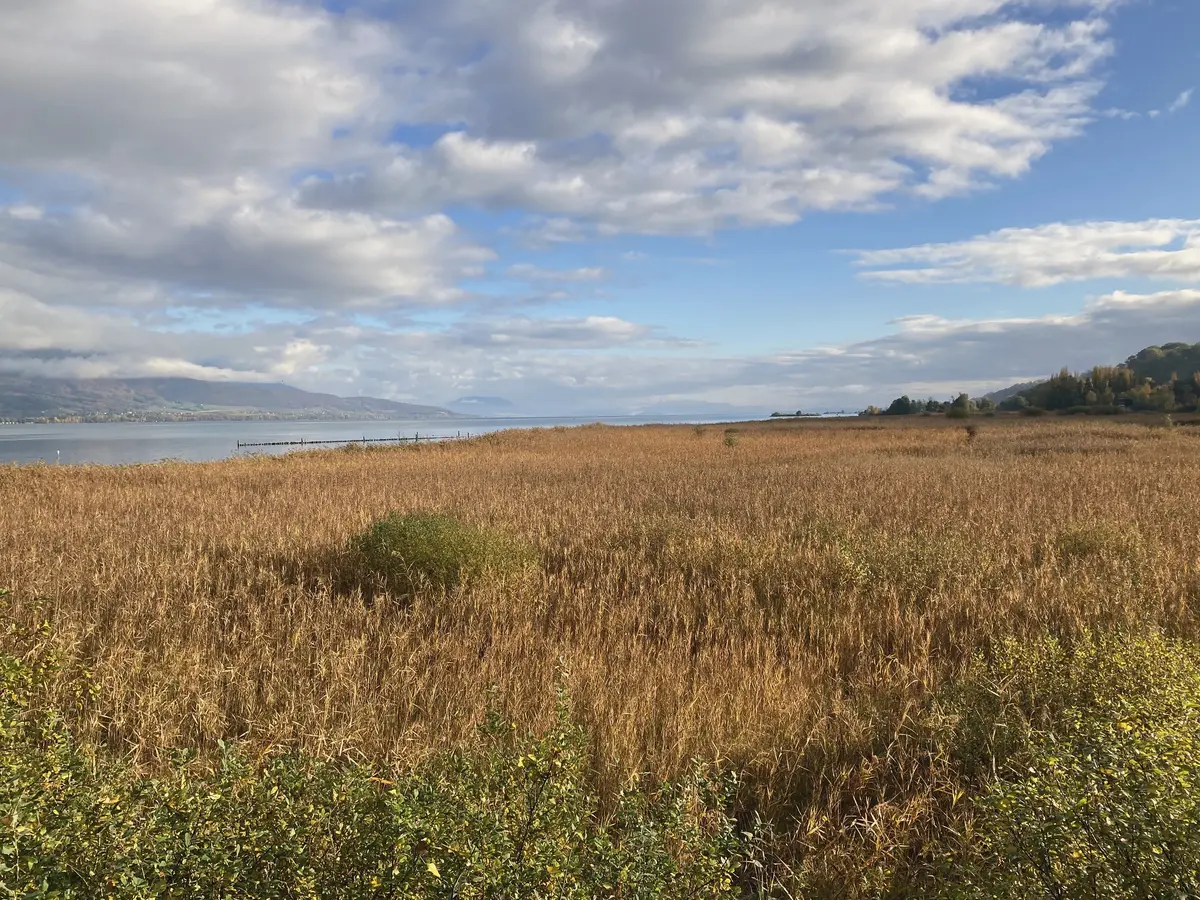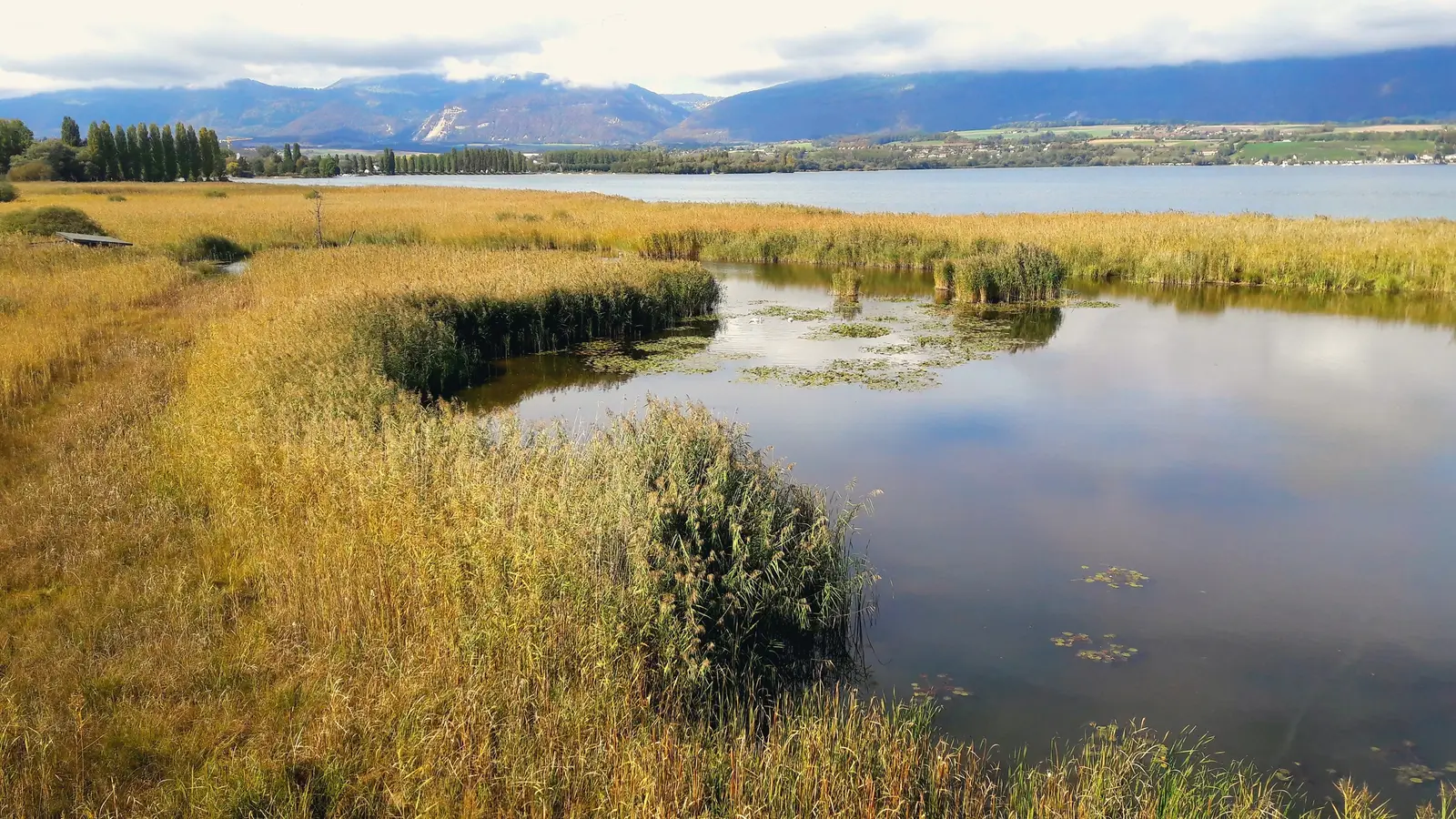
The whole south shore of Lake Neuchâtel is one long wild edge, and the Grande Cariçaie is its name: the largest lakeside marsh in Switzerland, a band of reedbeds, ponds and damp forest that begins right on Yverdon’s doorstep and runs across three cantons.
Why it matters
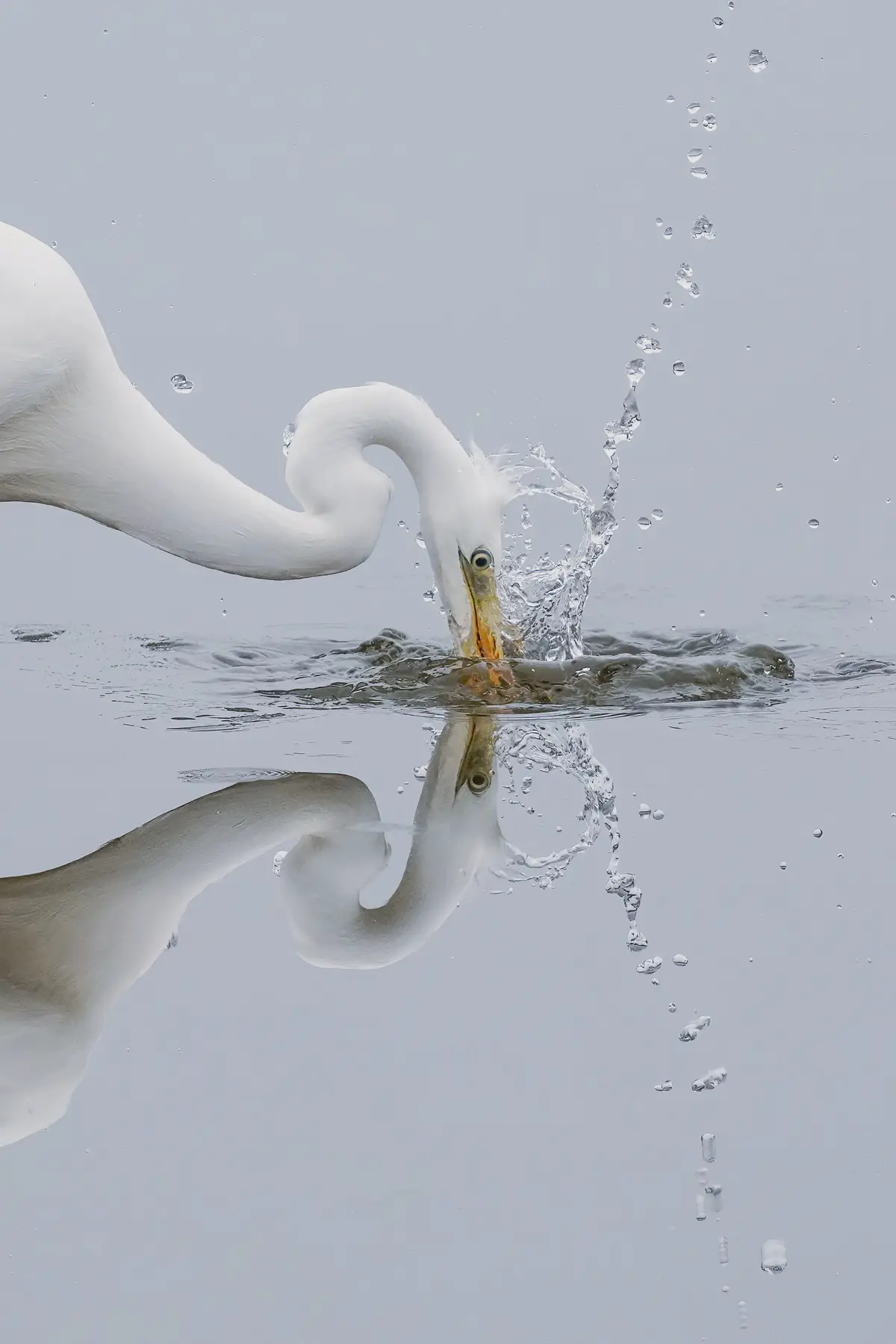
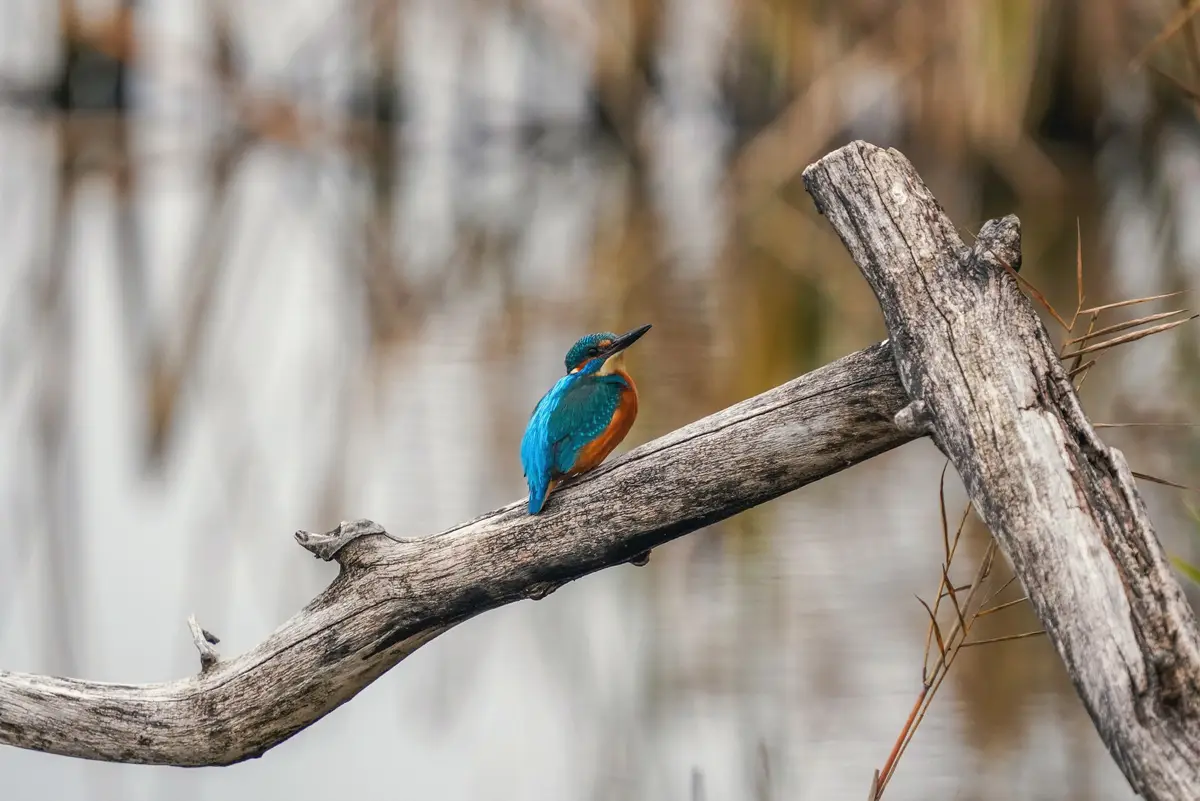
The reserve covers nearly 3,000 hectares across nine protected zones, and it is a Ramsar wetland of international importance, a recognised stopover on the migratory bird routes. The numbers are extraordinary for its size: more than 10,000 animal species and around 800 plants, roughly a quarter of all the species in Switzerland. The habitats shift as you move through it, from open reedbeds to wet meadows, ponds and damp forest, all shaped by the rise and fall of the lake.
Visiting
- Around 50 km of walking and cycling trails thread the shore, with bird hides and observatories set into the reeds and three reception centres to start from.
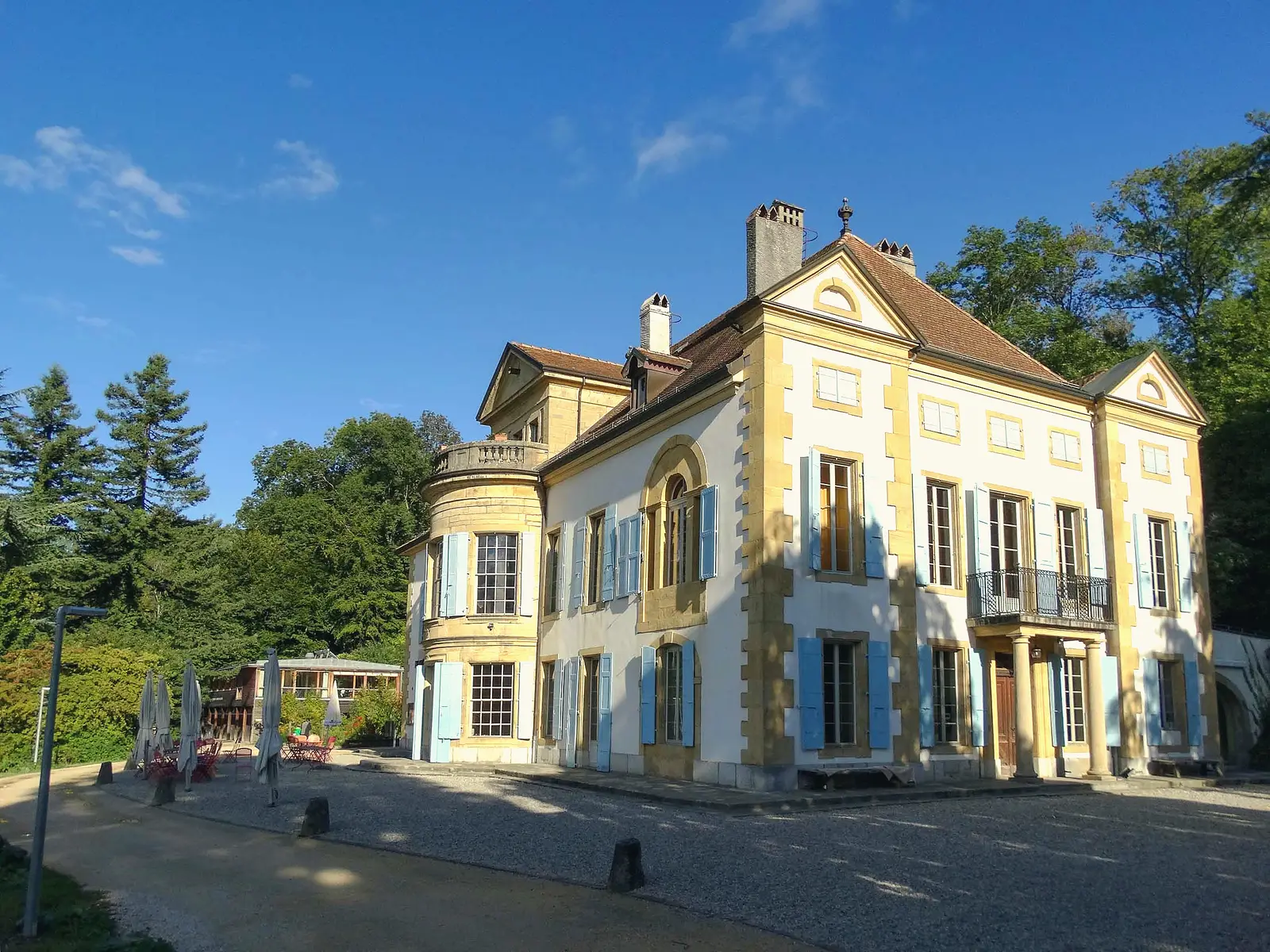
- The easiest way in is the Pro Natura Centre de Champ-Pittet at Cheseaux-Noréaz, which interprets the marsh for families.
- It is a protected reserve: keep to the marked trails, and follow the posted rules so the wildlife is left in peace. Open to walkers, cyclists, boaters and swimmers alike.
Combine it
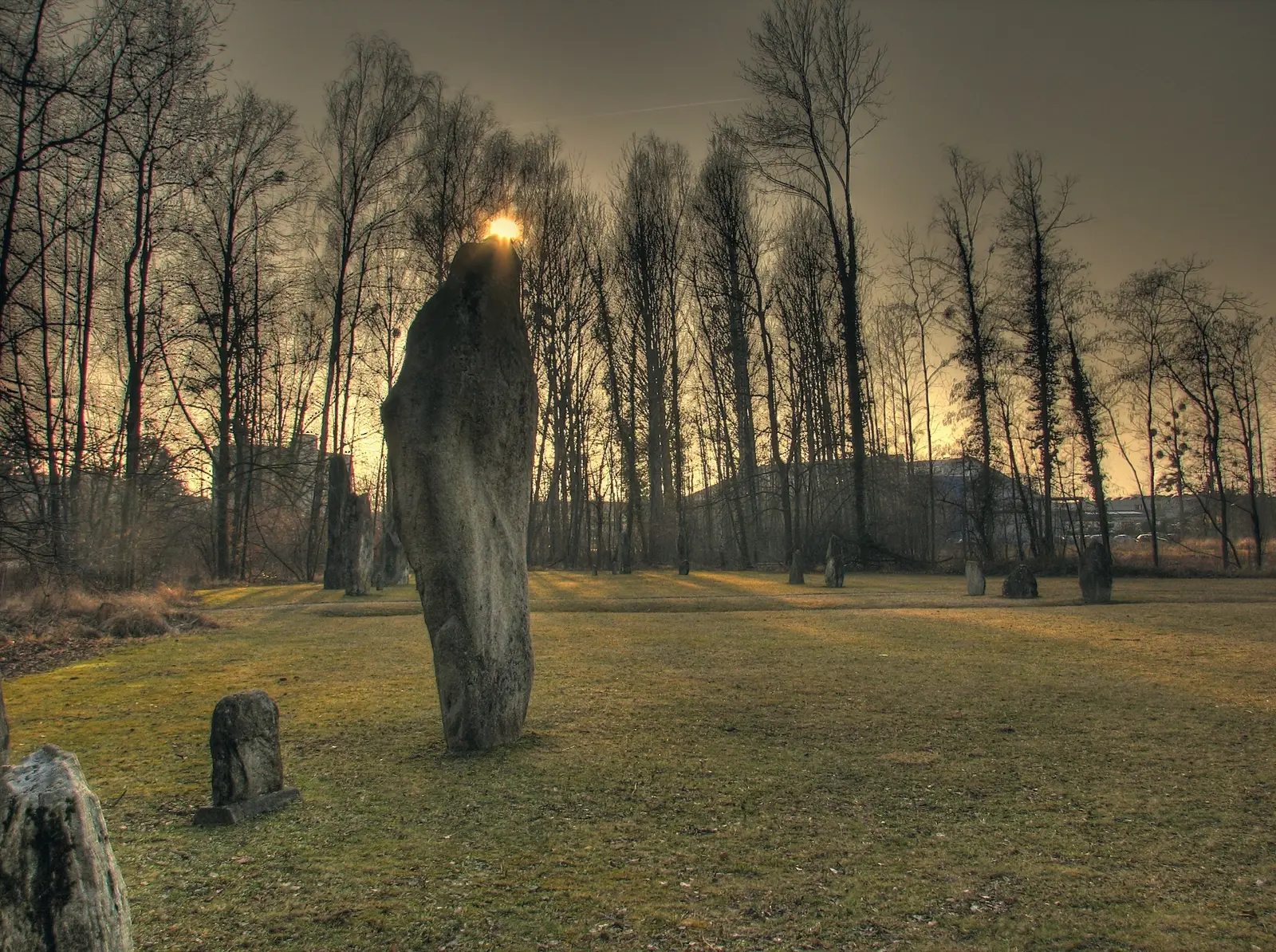
String it together with the Clendy menhirs and the lake beach along the same shore for an easy half-day on foot or by bike, deep history and a great wetland within a few kilometres of the old town.